
 EN
EN Español
 Pусский
 Tiếng Việt
Semiconductor Cavity Components
Semiconductor cavity components are critical elements in modern photonic and electronic systems, playing a central role in controlling light, confinement, resonance, and energy transfer within compact devices. These components are designed to create and maintain an optical or electromagnetic cavity, which is a carefully engineered space where waves can be reflected, amplified, or selectively filtered. By shaping the interaction between light and matter, semiconductor cavity components enable high-performance operation in lasers, sensors, modulators, detectors, and integrated photonic circuits.A semiconductor cavity typically consists of layered materials with different refractive indices, mirror structures, and active regions that support resonance at specific wavelengths. The cavity length, geometry, and material composition determine how photons circulate and interact with the semiconductor medium. When properly designed, the cavity enhances optical feedback and increases the probability of stimulated emission, making it essential for laser operation. It can also improve emission efficiency in light sources by concentrating optical fields near the active region.One of the most important functions of semiconductor cavity components is wavelength selection. Only specific resonant modes are supported inside the cavity, allowing devices to emit or detect light at well-defined frequencies. This characteristic is especially valuable in telecommunications, where precise wavelength control is needed for signal transmission and multiplexing. In sensing applications, cavity resonance shifts in response to environmental changes such as temperature, pressure, refractive index, or the presence of chemicals, enabling highly sensitive measurement.Semiconductor cavity components are commonly fabricated using advanced thin-film deposition, epitaxial growth, lithography, and etching techniques. These processes allow nanoscale control over layer thickness and structural uniformity, which are essential for achieving strong optical performance. High-quality cavity surfaces and interfaces reduce scattering losses and improve the overall quality factor of the resonator. A higher quality factor means the cavity can store energy longer, resulting in stronger resonance and better device efficiency.Different types of cavity structures are used depending on the application. Fabry-Pérot cavities rely on parallel reflective surfaces to trap light between mirrors. Microcavities offer compact dimensions and enhanced light-matter interaction. Distributed feedback and distributed Bragg reflector structures use periodic layers to control reflection and resonance. More recently, photonic crystal and whispering-gallery-type cavities have gained attention for their ability to confine light in extremely small volumes.The significance of semiconductor cavity components continues to grow as devices become smaller, faster, and more energy efficient. They support innovations in integrated optics, quantum technologies, biomedical sensing, and next-generation communication systems. By enabling precise control over electromagnetic fields at the microscale and nanoscale, semiconductor cavity components remain fundamental building blocks for advanced semiconductor and photonic engineering.
نتاج
تصنيف:
-
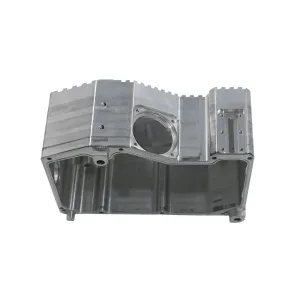
Semiconductor cavity
تصنيفها: Semiconductorالمشاهدات: 13عدد:وقت الإصدار: 2026-09-21 15:29:21Semiconductor cavity components are essential parts used in advanced semiconductor manufacturing equipment. Designed for high precision, cleanliness, and stable performance, these cavities support wafer processing, vacuum systems, and semiconductor production applications. Reliable semiconductor cavity solutions help improve equipment efficiency, process accuracy, and manufacturing consistency in modern chip fabrication and electronic industries.
أخبار
تصنيف:
لا توجد نتائج بحث!
حالة
تصنيف:
لا توجد نتائج بحث!
فيديو
تصنيف:
لا توجد نتائج بحث!
تحميل
تصنيف:
لا توجد نتائج بحث!
تجنيد
تصنيف:
لا توجد نتائج بحث!
المنتجات الموصى بها
لا توجد نتائج بحث!



 هاتف
هاتف