
 EN
EN Español
 Pусский
 Tiếng Việt
Humanoid robot joints
Humanoid robot joints are one of the most important components in a humanoid robot because they determine how the machine moves, balances, and interacts with its environment. Just like human joints connect bones and allow the body to bend, rotate, and extend, robot joints connect structural parts and create motion at the shoulders, elbows, wrists, hips, knees, and ankles. Without well-designed joints, a humanoid robot cannot perform natural movement or maintain stable posture.A humanoid robot joint usually consists of a motor, a transmission system, sensors, bearings, and a control unit. The motor provides power for movement, while the transmission system converts that power into usable torque and speed. Sensors measure position, velocity, force, or temperature, allowing the robot to know exactly where each joint is and how it is behaving. Bearings reduce friction and support smooth rotation, and the control unit coordinates all of these elements so the joint moves accurately and safely.Different joints serve different functions. The shoulder joint often needs a wide range of motion because the arms must move in many directions. The elbow joint typically focuses on flexion and extension, helping the robot lift objects or reach forward. The wrist joint allows finer manipulation, which is important for grasping tools or handling delicate items. In the lower body, the hip and knee joints play a major role in walking, climbing stairs, and maintaining balance. The ankle joint helps the robot adapt to uneven ground and absorb impact during movement.Designing humanoid robot joints is challenging because engineers must balance strength, precision, weight, and energy efficiency. A joint must be strong enough to support the robot’s body and carry external loads, but it also needs to be light enough to avoid wasting energy. If a joint is too heavy, the robot becomes less efficient and harder to control. If it is too weak, it may fail under stress. For this reason, joint design often involves careful selection of materials, mechanical structure, and control algorithms.Another important issue is compliance, which means the ability of a joint to absorb shock and adapt to unexpected contact. Human joints naturally have some flexibility, and robots also benefit from similar behavior. Compliant joints can make movement safer, especially when robots work near people. They can reduce damage during collisions and improve performance on uneven surfaces. Advanced control strategies can also make joints behave more smoothly and naturally.Humanoid robot joints are essential for tasks such as walking, lifting, turning, reaching, and balancing. As robotics technology continues to improve, joint systems are becoming more compact, efficient, and intelligent. These improvements bring humanoid robots closer to moving and acting in ways that resemble human motion.
نتاج
تصنيف:
-
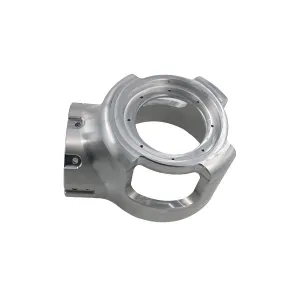
Humanoid robot joints
تصنيفها: Humanoid robotالمشاهدات: 11عدد:وقت الإصدار: 2026-09-21 16:13:46Humanoid robot joints are precision mechanical components designed to provide flexible movement and accurate control for advanced robotic systems. They integrate mechanical structures, sensors, and drive components to support natural human-like motion. These joints are widely used in industrial robots, service robots, research platforms, and intelligent automation equipment.
أخبار
تصنيف:
لا توجد نتائج بحث!
حالة
تصنيف:
لا توجد نتائج بحث!
فيديو
تصنيف:
لا توجد نتائج بحث!
تحميل
تصنيف:
لا توجد نتائج بحث!
تجنيد
تصنيف:
لا توجد نتائج بحث!
المنتجات الموصى بها
لا توجد نتائج بحث!



 هاتف
هاتف