
 EN
EN Español
 Pусский
 Tiếng Việt
Humanoid robot joint parts
Humanoid robot joint parts are the essential mechanical components that allow a humanoid robot to move in a way that resembles human motion. These parts connect the robot’s rigid body segments and provide the flexibility needed for walking, bending, turning, reaching, and grasping. Without joints, a humanoid robot would be unable to perform complex actions or maintain balance. Because of this, joint design is one of the most important aspects of humanoid robot engineering.A humanoid robot usually contains many joints in the neck, shoulders, elbows, wrists, hips, knees, and ankles. Each joint serves a specific function and must support precise motion under different loads. Some joints are designed for rotation, while others allow linear or multi-axis movement. The joint structure must be strong enough to bear the weight of the robot, yet compact enough to fit within a human-like frame. This balance between strength, size, and motion range is a major challenge in robot design.The core elements of a robot joint often include a motor, gear system, bearing, sensor, housing, and control unit. The motor generates motion, while gears reduce speed and increase torque. Bearings help reduce friction and enable smooth movement. Sensors monitor position, speed, and force, allowing the control system to adjust movement accurately. The outer housing protects internal components and ensures structural stability. Together, these parts create a reliable and efficient joint mechanism.There are different types of joint mechanisms used in humanoid robots. Some joints are simple rotary joints that move around a single axis. Others are more advanced and can imitate the behavior of a human shoulder or wrist, offering multiple degrees of freedom. High-degree-of-freedom joints are especially useful for tasks that require dexterity, such as lifting objects, using tools, or interacting with people. However, they are also more difficult to design and control.Materials play an important role in joint performance. Lightweight metals, engineering plastics, and composite materials are commonly used to reduce weight while maintaining durability. A lighter joint improves energy efficiency and allows the robot to move faster and more naturally. Heat resistance, wear resistance, and vibration control are also important considerations, especially for joints that operate continuously or carry heavy loads.Precision is another key requirement. Humanoid robots often need to perform actions in dynamic environments, so their joints must respond quickly and accurately. Advanced control algorithms help coordinate multiple joints at the same time, making smooth and stable movement possible. In many systems, feedback from sensors is used to correct errors in real time.In summary, humanoid robot joint parts are the foundation of movement, balance, and interaction. They combine mechanical strength, motion flexibility, and intelligent control to enable lifelike performance. As robotics technology continues to advance, joint parts will become even more efficient, compact, and adaptable, making humanoid robots more capable in both industrial and everyday applications.
نتاج
تصنيف:
-
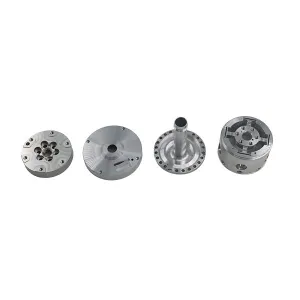
Humanoid robot articulated disc
تصنيفها: Humanoid robotالمشاهدات: 13عدد:وقت الإصدار: 2026-09-21 16:14:12The humanoid robot articulated disc is a precision mechanical component designed for robotic joint movement and flexible motion control. Manufactured with high accuracy and strict quality requirements, it provides stable performance, smooth operation, and reliable durability for humanoid robots, industrial robots, automation equipment, and advanced robotic systems.
أخبار
تصنيف:
لا توجد نتائج بحث!
حالة
تصنيف:
لا توجد نتائج بحث!
فيديو
تصنيف:
لا توجد نتائج بحث!
تحميل
تصنيف:
لا توجد نتائج بحث!
تجنيد
تصنيف:
لا توجد نتائج بحث!
المنتجات الموصى بها
لا توجد نتائج بحث!



 هاتف
هاتف