

The Precision CNC Parts Manufacturing process has become an essential manufacturing method for modern industrial applications. With the continuous development of automation, mechanical engineering, and advanced production technologies, industries require components with higher accuracy, better consistency, and improved reliability.
Precision CNC Parts manufacturing uses computer numerical control technology to produce complex components according to digital designs and engineering requirements. Compared with traditional machining methods, the precision CNC Parts Manufacturing process provides better dimensional accuracy, stable production quality, and flexible manufacturing capabilities.
In many industries, even a small dimensional error can affect equipment performance and product reliability. Therefore, precision CNC parts manufacturing plays an important role in producing components that require strict tolerances and high performance.
The CNC parts manufacturing process combines advanced CNC machines, professional programming, suitable materials, and detailed inspection procedures to create reliable industrial parts. From prototypes to production manufacturing, precision CNC parts manufacturing provides efficient solutions for various industrial applications.
What Is Precision CNC Parts Manufacturing?
Precision CNC parts manufacturing is a machining process that uses computer-controlled equipment to produce accurate mechanical components. The CNC system controls cutting tools based on programmed instructions, allowing manufacturers to create complex parts with consistent dimensions.
The main purpose of the precision CNC parts manufacturing process is to transform raw materials into finished components that meet specific design requirements.
A typical CNC parts manufacturing workflow includes:
Product design analysis
CAD model preparation
CNC programming
Material selection
Machining operations
Surface treatment
Quality inspection
Through automated control, precision CNC parts manufacturing reduces manual errors and improves production repeatability.
The process is widely used for manufacturing:
Mechanical components
Industrial equipment parts
Automation system components
Precision fixtures
Structural parts
Customized machine components
Importance of Precision CNC Parts Manufacturing in Industrial Applications
Modern industrial equipment requires components that can operate under demanding conditions. The precision CNC parts manufacturing process helps manufacturers achieve the accuracy and reliability needed for advanced applications.
Many industrial applications require extremely precise components. Small differences in dimensions can affect assembly performance, machine operation, and product lifespan.
Precision CNC parts manufacturing allows manufacturers to control:
Component dimensions
Surface quality
Position accuracy
Geometric tolerances
This ensures that CNC parts meet strict engineering requirements.
One major advantage of the CNC parts manufacturing process is repeatability. Once the CNC program is created, machines can produce the same parts repeatedly with stable quality.
This consistency is especially important for industries that require large quantities of identical components.
Traditional machining methods may have limitations when producing complex designs. The precision CNC parts manufacturing process can create complicated shapes, detailed structures, and multi-dimensional components.
Multi-axis CNC Machining technology allows manufacturers to produce parts with complex geometries while maintaining high accuracy.
Main Steps of Precision CNC Parts Manufacturing Process
The precision CNC parts manufacturing process includes multiple stages. Each stage affects the final quality and performance of CNC parts.
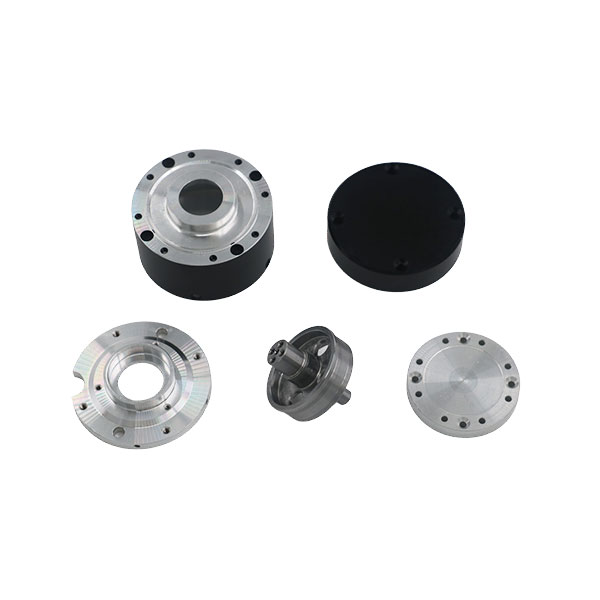
1. Engineering Design and Drawing Preparation
The first stage of precision CNC parts manufacturing begins with product design. Engineers create detailed CAD drawings or three-dimensional models based on application requirements.
Design files usually include:
Part dimensions
Material specifications
Surface finish requirements
Manufacturing tolerances
Assembly information
Accurate design preparation helps optimize the CNC machining process and ensures successful parts production.
2. CNC Programming
After the design stage, engineers create CNC programs that control machine operations.
The CNC program defines:
Tool movement paths
Cutting sequences
Machining speed
Feed rates
Tool selection
Proper CNC programming is critical for the precision CNC parts manufacturing process because it directly influences machining accuracy and production efficiency.
Advanced programming methods allow CNC machines to manufacture complicated industrial components with excellent precision.
3. Material Selection for CNC Parts Manufacturing
Material selection is an important part of precision CNC parts manufacturing. Different industrial applications require different material characteristics.
Common materials used in the CNC parts manufacturing process include:
Aluminum is widely used because of its lightweight properties, corrosion resistance, and good machinability. Aluminum CNC parts are commonly applied in industries requiring reduced weight and efficient performance.
Stainless steel provides excellent strength and corrosion resistance. It is suitable for industrial applications requiring durable and long-lasting components.

Carbon steel offers good mechanical strength and is often used for structural and mechanical parts.
Copper provides excellent electrical and thermal conductivity, making it suitable for electrical and industrial components.
Engineering plastics are used when lightweight, insulation, chemical resistance, or wear resistance is required.
Selecting the correct material improves the performance and service life of precision CNC parts.
CNC Machining Methods Used in Precision Parts Manufacturing
The precision CNC parts manufacturing process uses different machining methods depending on the design and application requirements.
CNC Milling Process
CNC milling is one of the most common methods in precision CNC parts manufacturing.
During CNC milling, rotating cutting tools remove material from a workpiece to create the required shape.
CNC milling can produce:
Flat surfaces
Grooves
Holes
Complex contours
Detailed structures
The CNC milling process is widely used for manufacturing industrial components with complex designs.
CNC Turning Process
CNC turning is mainly used for producing cylindrical components.
During CNC turning, the workpiece rotates while cutting tools remove material to achieve the required shape.
Typical CNC turning parts include:
Shafts
Sleeves
Bushings
Rotating components
The CNC turning process provides excellent dimensional control for precision CNC parts.
CNC Drilling Process
CNC drilling creates accurate holes in industrial components.
Accurate drilling is important for:
Assembly accuracy
Component connection
Mechanical performance
In the precision CNC parts manufacturing process, CNC drilling is often combined with milling and turning operations.
Surface Treatment and Finishing
After machining, many precision CNC parts require additional surface processing.
Common finishing methods include:
Polishing
Grinding
Coating
Anodizing
Heat treatment
Surface finishing improves:
Wear resistance
Corrosion resistance
Appearance
Functional performance
These processes help extend the service life of CNC parts used in industrial applications.
Applications of Precision CNC Parts Manufacturing
The precision CNC parts manufacturing process is widely used across different industries because of its accuracy and flexibility.
Automotive Applications
The automotive industry requires reliable mechanical components with consistent performance.
Precision CNC parts manufacturing is used for producing:
Engine components
Transmission parts
Brackets
Fixtures
Mechanical assemblies
The CNC parts manufacturing process helps improve production efficiency and component reliability.

Aerospace Applications
Aerospace Components require strict precision standards and excellent material performance.
The precision CNC parts manufacturing process supports the production of lightweight and complex aerospace components.
Medical Equipment Applications
Medical equipment requires accurate and reliable parts.
CNC parts manufacturing is used for:
Medical device components
Precision instruments
Equipment parts
High-quality precision CNC parts help improve equipment performance and reliability.
Automation Equipment Applications
Automation systems depend on accurate mechanical components.
The precision CNC parts manufacturing process supports the production of:
Robot components
Machine fixtures
Automation parts
Custom mechanical structures
Electronics Applications
Electronic equipment often requires small and accurate components.
Precision CNC Machining helps produce:
Housings
Connectors
Structural components
Heat management parts
Quality Control in Precision CNC Parts Manufacturing
Quality control is a key part of the precision CNC parts manufacturing process.
A complete inspection process helps ensure that CNC parts meet design requirements.
Common inspection methods include:
Dimensional measurement verifies whether CNC parts match engineering drawings.
Surface inspection ensures proper finishing and appearance.
Tolerance testing confirms that precision CNC parts meet required accuracy levels.
Functional testing checks whether components perform correctly in actual applications.
Advantages of Precision CNC Parts Manufacturing
The biggest advantage of precision CNC parts manufacturing is excellent dimensional accuracy.
CNC Machining Supports prototypes, small batches, and large production requirements.
Automation reduces human errors and improves production stability.
The CNC parts manufacturing process improves machining efficiency and reduces production time.
Future Development of CNC Parts Manufacturing Technology
The future of precision CNC parts manufacturing will continue developing toward intelligent and automated production.
Future trends include:
Smart CNC machining systems
Automated production lines
Digital manufacturing solutions
Real-time monitoring technology
Improved machining accuracy
These developments will further improve the efficiency and capability of the CNC parts manufacturing process.
Conclusion
The precision CNC parts manufacturing process is a critical technology for modern industrial applications. Through advanced CNC machining methods, accurate programming, suitable material selection, and strict quality control, manufacturers can produce reliable and high-performance components.
From automotive and aerospace to medical equipment, automation systems, and electronics, precision CNC parts manufacturing provides flexible and efficient solutions for different industries.
As industrial requirements continue to increase, the CNC parts manufacturing process will remain an important manufacturing method for producing accurate, durable, and customized industrial components.
يستخدم هذا الموقع ملفات تعريف الارتباط لضمان حصولك على أفضل تجربة على موقعنا.
 EN
EN Español
 Pусский
 Tiếng Việt



 هاتف
هاتف
تعليق
(0)